
Write HTML Using Notepad or TextEdit
- Web pages can be created and modified by using professional HTML editors.
- However, for learning HTML we recommend a simple text editor like Notepad (PC) or TextEdit (Mac).
- We believe using a simple text editor is a good way to learn HTML.
- Follow the steps below to create your first web page with Notepad or TextEdit.
Step 1: Open Notepad (PC)
Windows 8 or later:
- Open the Start Screen (the window symbol at the bottom left on your screen). Type Notepad.
Windows 7 or earlier:
- Open Start > Programs > Accessories > Notepad
Step 1: Open TextEdit (Mac)
- Open Finder > Applications > TextEdit
- Also change some preferences to get the application to save files correctly. In Preferences > Format > choose “Plain Text”
- Then under “Open and Save”, check the box that says “Display HTML files as HTML code instead of formatted text”.
- Then open a new document to place the code.
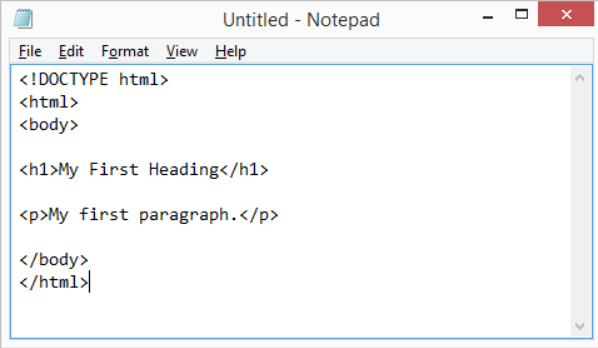
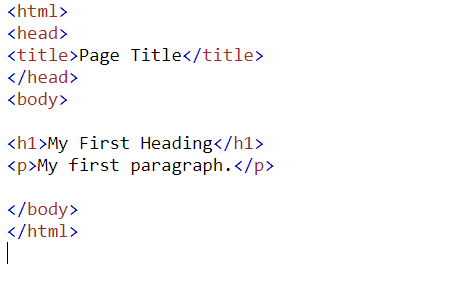
Step 2: Write Some HTML
- Write or copy some HTML into Notepad.
Step 3: Save the HTML Page
- Save the file on your computer. Select File > Save as in the Notepad menu.
- Name the file “index.htm” and set the encoding to UTF-8 (which is the preferred encoding for HTML files).
Step 4: View the HTML Page in Your Browser
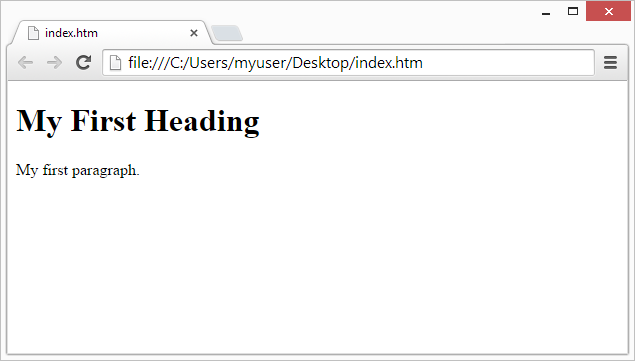
- Open the saved HTML file in your favorite browser (double click on the file, or right-click – and choose “Open with”).
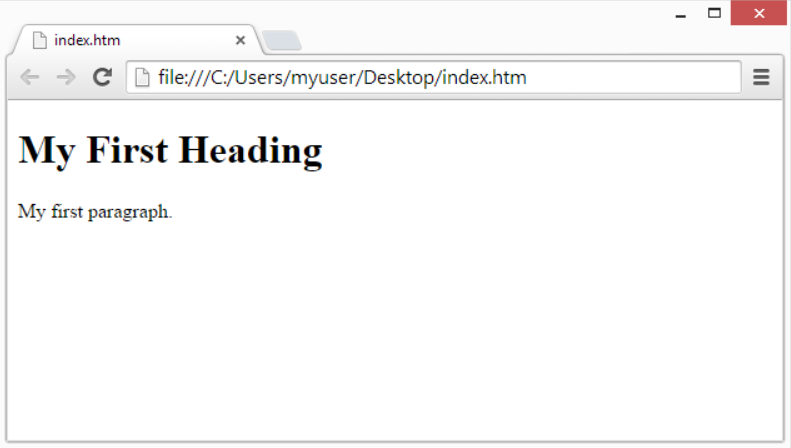
- The result will look much like this:
 WorldBlogs